Scheduling is often treated like a small task. Something to handle later. A calendar link, a quick follow-up, a step after the “real” conversation. But that view misses something important. Scheduling is not just admin work. It is the exact moment when a customer decides what to do next. Whether to move forward, wait, or leave. And most businesses lose people right there.
Someone shows interest. They ask a question. They explore a product. Then they are asked to “book a time.” That’s where things slow down. That’s where attention drops. The gap between intent and action is where opportunities disappear.
Where Most Conversions Are Lost
The biggest loss does not happen at the top of the funnel. It happens in the middle. Right when people are thinking, deciding, and getting ready to act. Studies show that 30–50% of users drop off during early interaction stages. Not because they are not interested, but because the next step is unclear or too slow.
Think about how most systems work. A user shows interest. They are sent a link. Now they have to pick a time, understand options, and decide on their own. No help. No context. No guidance.
That is not engagement. That is friction.
The Decision Gap Between Interest and Action
Interest is not the same as action. Someone can be curious, even excited, and still not move forward. Time delays make it worse. If a response takes hours or even minutes, the moment fades. This is the decision gap. Users need direction at that moment. They need help, not just a tool. A link does not answer questions. It does not guide. It simply waits. And most users do not wait.
How AI Turns Scheduling Into Real-Time Engagement
This is where things start to change. AI appointment scheduling with an AI Agent system shifts the entire timing of interaction. Instead of asking users to come back later, they respond instantly right when the intent appears.
Speed matters more than most teams realize. Responding within minutes instead of hours can improve lead qualification rates by up to 21 times. That is not a small gain. That is a complete shift in performance.
An AI chatbot for scheduling does not just show available slots. It interacts. It listens. It helps users move forward without breaking the flow. In many cases, businesses see up to 30% more bookings simply because they remove the delay.
Capturing Intent the Moment It Appears
Intent is fragile. It exists for a short window. When someone asks, “Can I talk to someone?” or “How does this work?” they are ready. Not later. Now. A system that responds instantly can act in that moment. It can guide the user, suggest next steps, and offer to book without forcing them to think twice.
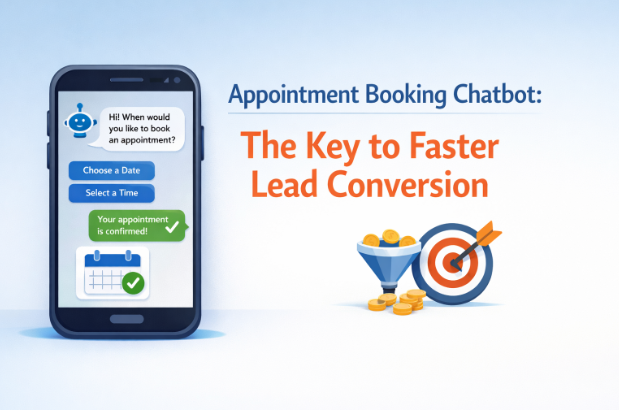
This is where an appointment booking chatbot becomes powerful. It does not wait for the user to take action. It meets them where they are. It turns a question into a decision.
Scheduling Becomes Part of the Conversation
In traditional systems, scheduling happens after the conversation. In modern systems, it occurs within them. That small shift makes interactions much easier.
Instead of:
- Ask a question
- Get a reply
- Click a link
- Book later
It becomes:
- Ask a question
- Get a reply
- Book immediately
No break. No delay. No confusion. Scheduling is no longer a separate step. It becomes a natural part of the interaction. That is what real-time engagement looks like.
From Tool to System: Why Scheduling Now Drives Engagement
Scheduling only works when it is part of something bigger. If it sits alone, it stays limited. But when it connects to conversations, data, and behavior, it becomes a system. An AI chatbot for customer engagement does more than answer questions. It tracks interactions. It understands patterns. It learns from what users ask and how they respond.
Conversations do not end when a meeting is booked. They create data. They show what people care about. Where they hesitate. What they do not understand. Over time, this becomes a loop of improvement. Questions that were missed before can be answered better next time. Responses can become clearer. The experience becomes smoother. This is how engagement grows.
Always-On Engagement Changes User Expectations
Customer behavior has already changed.
Around 82% of users expect immediate responses. About 66% expect replies within minutes. Waiting is no longer acceptable.
And a large portion of inquiries, often 30–40%, happen outside business hours. That means if your system is only active during the day, you are missing real opportunities. An AI chatbot for customer service allows businesses to stay available at all times. Not just to answer questions, but to guide users, schedule meetings, and keep interactions moving.
This creates a new standard. Users no longer think in terms of business hours. They expect engagement when they need it.
Why AI Scheduling Is Now a Revenue Lever
This is where the real impact shows. Scheduling is no longer just about organizing time. It directly affects revenue. When meetings happen faster, pipelines move faster. When users get answers instantly, they convert more often. An AI appointment scheduler helps reduce delays, which means fewer lost opportunities. It keeps the momentum going.
No-shows also decrease. With automated reminders and smarter follow-ups, businesses can reduce missed appointments by up to 75%. That alone changes outcomes significantly. Then there is efficiency.
Handling interactions manually is expensive. AI systems can automate 30–50% of routine conversations. The cost difference is massive. Around $0.50 per interaction compared to $6 or more for human handling. That allows teams to handle more volume without increasing costs at the same rate.
An AI-powered chatbot for scheduling sales meetings and service does not just support growth. It enables it. It scales without slowing down. It responds without waiting. It keeps the process moving from interest to action without interruption.
That is what makes it a revenue lever.
Conclusion
Scheduling is when a potential customer decides to move forward. It is where interest turns into action. Or disappears. AI now sits exactly at that moment. Not before. Not after. Right there. The businesses that win are not the ones with better tools. They are the ones who respond at the right time. Because in the end, the fastest response usually gets the decision.