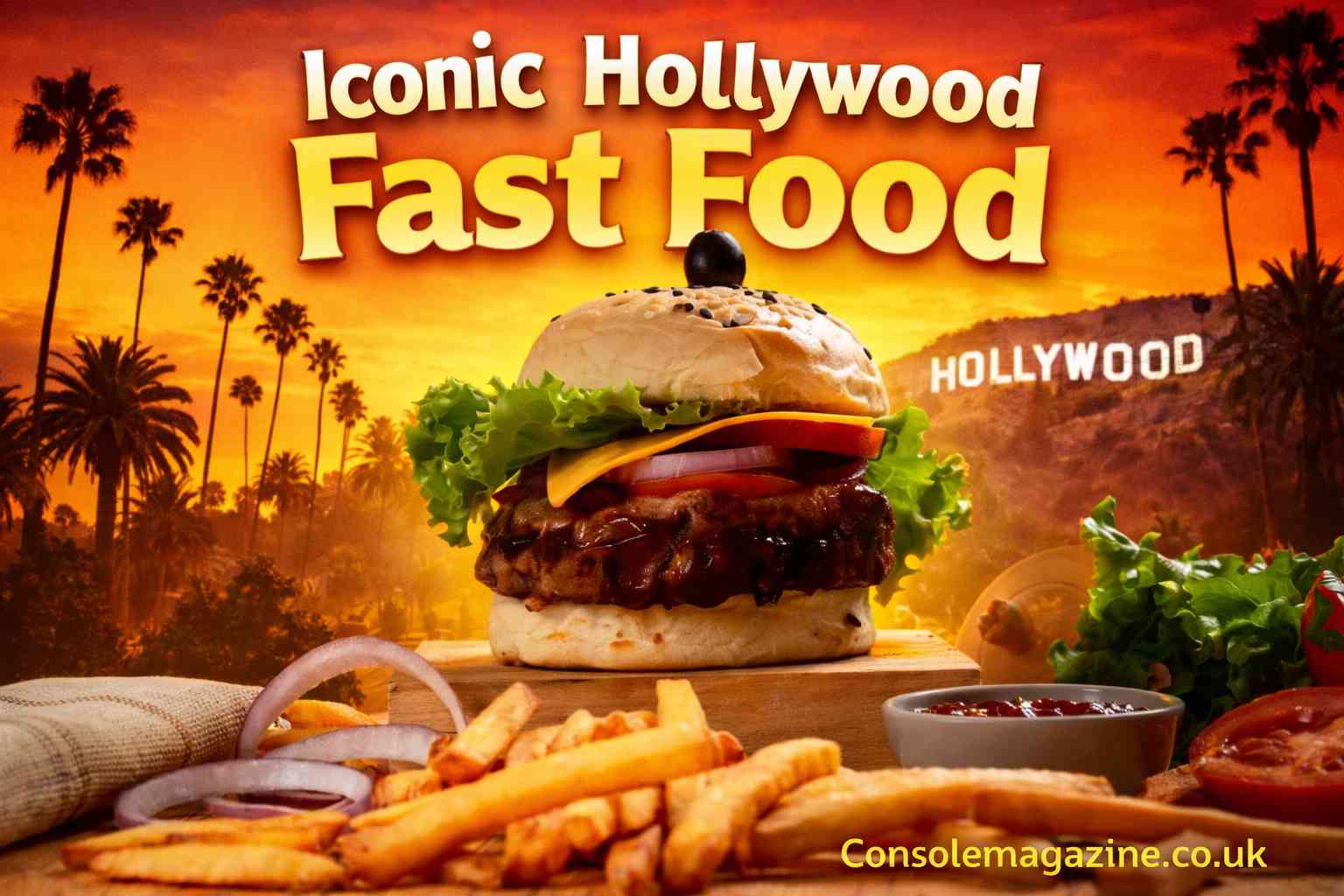
Fast food and Hollywood have a long and surprisingly rich relationship — one that goes far beyond mere burgers and fries shown on screen. From neon‑lit diners and greasy paper bags to fictional burger joints that became cult classics, fast food is a visual shorthand Hollywood uses to tell stories about class, identity, youth, rebellion, and the rhythms of everyday life.
When audiences see characters bite into a burger, sip a milkshake, or share fries at a late‑night drive‑thru, they aren’t just watching someone eat — they’re watching shared cultural rituals unfold. That’s why iconic Hollywood fast food scenes matter as much to storytelling as plot or dialogue.
In this ultimate guide, we explore how fast food became cinematic legend, how filmmakers use it to reveal character and culture, and why these scenes still resonate with audiences around the world.
The Birth of Iconic Hollywood Fast Food
In early cinema, food rarely played more than a functional role — a character needed to eat to avoid distraction, or a background diner set filled space. But as American fast food culture exploded in the mid‑20th century, filmmakers began to realize that something as simple as a burger could reveal volumes about character and context.
During the post‑World War II era, diners and drive‑ins became key symbols of American modernity — spaces of freedom, youthful spontaneity, and social mixing. Cars were ubiquitous, highways opened up, and quick meals became a part of daily life. Teenagers shared milkshakes between dates, families stopped for quick bites on road trips, and truckers exchanged stories over coffee and eggs. These everyday scenes seeped into Hollywood storytelling as visual signifiers of American life.
A chrome diner counter, spinning stools, or paper cups clutched between fingers could tell audiences everything about class, era, and mood without a single line of dialogue. As cinema evolved, fast food moved from background prop to active storytelling tool, helping filmmakers convey context, emotion, and identity in subtle, powerful ways.
Fictional Fast Food Joints That Became Legendary
One of the most fascinating aspects of fast food in movies is not just real restaurants but entire fictional chains that have become pop culture touchstones.
Big Kahuna Burger — Quentin Tarantino’s Cinematic Myth
Perhaps no fictional fast food brand is as iconic as Big Kahuna Burger, a Hawaiian‑themed fast food chain that recurs throughout Quentin Tarantino’s films, including Pulp Fiction, Reservoir Dogs, and From Dusk Till Dawn. The chain’s appearance in Pulp Fiction, where Jules famously says “This is a tasty burger…” during an intense interrogation, turned a nonexistent burger into a cinematic legend.
Good Burger — Cult Classic Comedy Setting
Another classic example is the fictional burger joint in the 1997 comedy Good Burger, based on a sketch from the Nickelodeon series All That. The film became a cult favorite, solidifying its place in 90s pop culture and highlighting how even comedy can use fast food environments to anchor narrative and humor.
These invented restaurants offer filmmakers total creative freedom — from logos to menu design — enabling them to shape worlds that feel authentic yet timeless. And unlike real brands that evolve over time, fictional eateries stay frozen in the film’s era, becoming nostalgic symbols that fans revisit and celebrate long after the credits roll.
Burgers, Fries, and Milkshakes: The Core of Iconic Hollywood Fast Food
To most audiences, fast food conjures up burgers, fries, and milkshakes — and Hollywood has long used these staples to convey emotion, character, and mood.
Burgers as Narrative Devices
Burgers are visually compelling: they’re universally recognized, messy in just the right way for cinematography, and laden with cultural meaning. A confident character may bite into a burger boldly; a nervous one barely touches their fries. These small visual cues help deepen characterization without explicit exposition.
Milkshakes and Clever Symbolism
Milkshakes — especially when shared — often symbolize connection, youth, and intimacy. Pulp Fiction features a memorable scene in which Vincent Vega orders a $5 milkshake — a detail that subtly underscores both character personality and the film’s quirky dialogue‑driven storytelling.
Fries and Visual Weight
Even seemingly minor fast food items like fries or soda cups carry meaning. A spilled order of fries on a table can visually signify loss, distraction, or the end of a relationship; two soda cups together can suggest companionship or routine.
These simple foods become iconic precisely because they reflect ordinary experiences that everyone understands.
How Fast Food Scenes Reveal Character and Class
Hollywood often uses the setting of a fast food restaurant to do what thousands of words of dialogue might otherwise have to explain.
Food Choices as Characterization
What characters choose to eat — and how they eat it — reveals personality. A picky eater may fuss over their order; someone carefree might dive right in. These small decisions subtly paint character traits that feel familiar and human.
Depicting Social Class Through Fast Food
Fast food settings can also highlight social class. Cheap burgers and plastic trays often place characters in an economic frame of reference without overt commentary. When wealthy characters appear in fast food restaurants, filmmakers often use the contrast purposefully — perhaps to suggest they’re trying to feel normal, or hiding something about themselves.
Because fast food crosses social boundaries, rich and poor alike can inhabit the same spaces — making these scenes powerful places for revealing society’s structures without stating them directly.
Fast Food as a Cultural Symbol in Hollywood Storytelling
Beyond character or plot, fast food in film often represents broader cultural themes.
Freedom and Youth
Drive‑ins and diners symbolize mobility, independence, and American freedom — especially in classic films from the 1950s and 1960s.
Metaphor for Modernity
Fast food also reflects the pace of modern life — quick, convenient, and always on the move. Drive‑thru windows and paper bags carry metaphoric weight, representing transitions and the fast pace of societal change.
Global Cultural Recognition
Hollywood’s depiction of fast food has spread globally, making burgers and fries shorthand for American culture in other countries’ films as well. When audiences around the world see these scenes, they instantly understand the cultural context being referenced.
The Influence of Hollywood on Real‑World Fast Food Culture
Hollywood doesn’t just reflect fast food culture – it actively influences it.
On Consumer Cravings
Memorable scenes can turn ordinary meals into cultural cravings. After Pulp Fiction popularized the Big Kahuna Burger in the 1990s, fans sought out real‑world versions of the fictional meal.
Fast Food in Documentary Cinema
Documentaries like Super Size Me (2004) brought fast food into public discourse in a new way. Director Morgan Spurlock famously ate only McDonald’s for 30 days, gaining significant weight and igniting national conversations about diet, nutrition, and corporate responsibility. The film is credited with influencing policy discussions and even industry changes like the decline of the “super‑size” option.
Brand Placement and Consumer Perceptions
Studies show that food brands — especially fast food — are frequently portrayed in movies, often in aspirational or casual contexts that downplay negative health effects. Analysis of 200 popular films found over 200 fast food brand placements, with McDonald’s and Burger King among the most common.
This kind of exposure influences consumer perceptions and brand preference, especially when characters interact with the food casually and without consequence.
Why Fast Food Remains a Timeless Hollywood Motif
Despite shifts in dietary trends, health movements, and changing cultural attitudes toward food, fast food remains a consistent motif in film.
Universality
Almost everyone has eaten fast food, smelled it, or at least recognizes it — making these scenes instantly relatable. A single shot of a burger or soda cup can ground viewers in a familiar world within seconds.
Flexibility Across Genres
Fast food can fit into almost any genre — from comedies and dramas to thrillers and romances. It can be oppressive, comforting, nostalgic, or humorous, depending on how it’s presented.
Reflection of Real Life
Fast food scenes often mirror rhythms of everyday life — quick lunches between errands, late‑night coffee runs, and routine drive‑thru stops. These moments connect audiences to characters in deeply human ways.
The Lasting Legacy of Iconic Hollywood Fast Food
Hollywood didn’t just capture fast food — it mythologized it.
Cultural Memory and Emotional Impact
Iconic food scenes become part of collective memory. People remember moments like Jules’ burger commentary in Pulp Fiction or the shared burger in Good Will Hunting because these scenes tap into shared experiences of eating and connection.
Social Media and Pop Culture Amplification
Today, fast food scenes are shared endlessly on social media — gifs of memorable moments, recreations of movie meals, and fan discussions keep these scenes alive for new generations.
Crossover into Real Life
Films have inspired real‑world fast food creations, themed pop‑ups, and even entire restaurant concepts based on fictional brands — a testament to the power of cinema in shaping food culture.
Conclusion: How Ordinary Meals Become Cinematic Legend
Iconic Hollywood fast food is more than burgers, fries, or milkshakes. It’s a storytelling device, a cultural symbol, and a reflection of human experience. Hollywood shows us that even the simplest meals can carry emotional weight, define characters, and reflect broader themes about society.
From classic diners and roadside drive‑ins to fictional burgers that outlive their movies, fast food remains woven into the fabric of cinematic storytelling. And as long as films continue to tell human stories, you can be sure – somewhere in the frame, someone will be eating something familiar, something ordinary, something unforgettable.